TLDR
- Your builder runs the construction. Your owner's rep makes sure the construction serves you. These are two different jobs with two different loyalties.
- A builder's project manager is not a substitute for independent oversight, because that PM's paycheck comes from the builder, not from you.
- Good builders actually benefit from working with an owner's rep: faster decisions, fewer disputes, and one professional point of contact instead of a stressed homeowner.
- Specific tasks like pay application review, drawing verification, and change order negotiation are where the roles diverge most clearly.
Your custom home builder and your owner's representative are not the same thing. They're not competing for the same job. And one does not replace the other.
This is the most common misconception I run into, from both homeowners and builders. A homeowner asks, "Why do I need an owner's rep if my general contractor already has a project manager?" A builder asks, "Why does my client need someone looking over my shoulder?"
Both questions are reasonable. Both miss the point.
I've spent nearly 15 years in construction. I've designed structural packages for custom homes. I've managed field crews for a specialty contractor. I've sat in the GC's chair, the engineer's chair, and the inspector's chair. I understand what a builder does because I've done large parts of that job myself. And I can tell you with confidence: these two roles are designed to work together, not against each other.
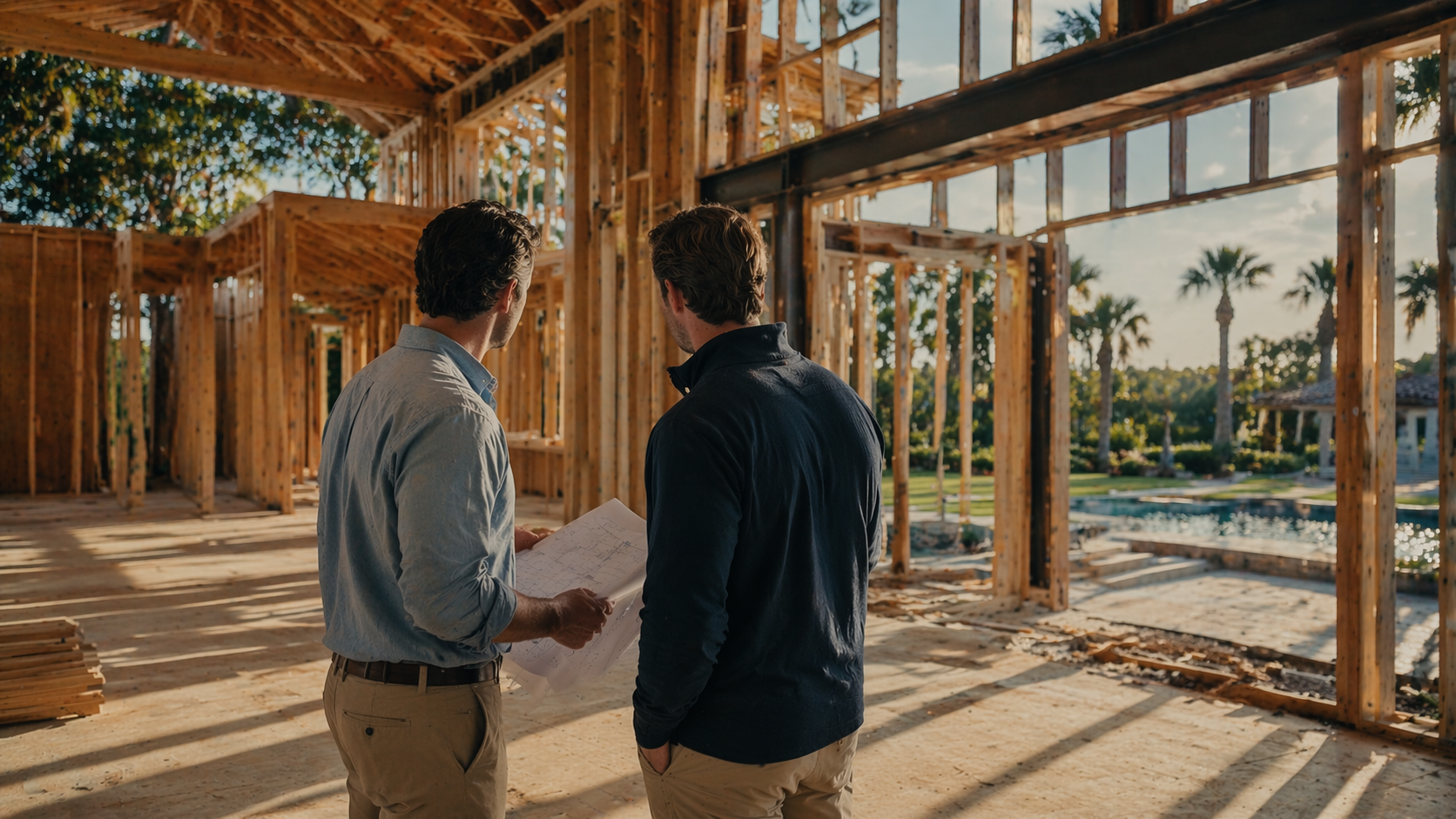
Two Jobs, Two Loyalties
Let me make this as clear as I can.
Your builder's job is to construct your home. They hire and coordinate subcontractors. They order materials. They manage the construction schedule. They pull permits. They solve field problems in real time. They turn drawings into a building. That is an enormous amount of work, and a good builder earns every dollar of their fee doing it.
Your owner's representative's job is to make sure that construction serves your interests. They review your contract before you sign it. They verify that pay applications match completed work before you write a check. They evaluate change orders to determine if they're legitimate scope additions or margin recovery. They check that what's being built matches what's in the drawings. They track the budget and schedule from your perspective, not the builder's.
The builder works for the project. The owner's rep works for you.
That distinction matters because the builder is running a business. Their profit comes from the gap between what you pay and what the construction costs them. That doesn't make them dishonest. It makes them a business, same as any contractor, attorney, or consultant. But it means their financial incentive is structurally different from yours.
Your owner's representative has no financial interest in the construction cost going up or down. They're paid a flat fee or a percentage, and their only job is making sure you get what you're paying for. Full disclosure: I have a financial interest in you hiring me. But my fee doesn't change based on what your project costs, which means I have zero incentive for your budget to grow.
"But My Builder Already Has a Project Manager"
This is the most common version of this question, and I addressed it briefly in my post on what an owner's representative does during a custom home build. But it's worth going deeper here.
Yes, your builder has a project manager. On a luxury custom home, that PM might be excellent. Experienced, organized, communicative. None of that changes the fundamental issue: that PM's paycheck comes from the builder.
Their job is to deliver the project profitably for the GC. Every decision they make is filtered through that lens. When they review a change order, they're reviewing it to protect the builder's margin. When they evaluate a pay application, they're processing it to keep the builder's cash flow moving. When they manage the schedule, they're balancing your project against the builder's other commitments.
This isn't a criticism. It's how the business works. A builder's PM who prioritized the homeowner's budget over the builder's profitability would get fired. That's not their job.
An owner's representative reviews those same documents, the same change orders, pay applications, and schedules, but from the opposite side of the table. They're asking different questions:
- Does this pay application reflect work that's actually been completed?
- Is this change order truly outside the original scope, or is the builder recovering margin they lost during competitive bidding?
- Does the material on site match what's specified in the contract?
- Is the schedule slipping, and if so, who bears the cost of the delay?

Your architect checks design intent. Your attorney checks legal language. Your lender's inspector checks collateral value. But none of them have your construction budget as their primary focus. That's the gap an owner's representative fills.
Five Tasks That Show the Difference
The difference between these roles gets concrete fast when you look at specific construction activities. These are the tasks where the two jobs clearly separate. See how Snead Advisory structures these services.

Pay Application Review
Your builder submits a monthly pay application requesting payment for work completed. The builder's PM prepared that application. An owner's representative reviews it independently: walking the site, verifying percentages of completion, checking that billed amounts match actual progress. On a $4M build, a single pay application might request $200,000-$400,000. Writing that check without independent verification is a leap of faith most people wouldn't take with any other purchase.
Change Order Evaluation
Change orders are where the most money moves on a custom home, and they often get less scrutiny than the original contract. Your initial bid went through weeks of negotiation. But a $60,000 change order mid-construction? That might get approved with a phone call. An owner's representative evaluates each change order for scope accuracy, fair pricing, and whether it was actually caused by something outside the original agreement. I wrote about how quickly budgets can escalate when these line items aren't reviewed carefully.
Drawing Verification
Is what's being built actually what's in the approved drawings? This sounds basic, but on a complex custom home with architectural details, structural elements, and specialty systems, discrepancies happen regularly. In Central Florida specifically, hurricane code compliance adds another layer: roof-to-wall connections, wind mitigation details, impact-rated assemblies, and specific tie-down requirements all need to be verified against the structural drawings during construction, not after. An owner's rep with a structural engineering background, like mine, can catch issues that a homeowner would never see. A load-bearing wall framed in the wrong location. A beam sized incorrectly. A wind clip installed to the wrong specification. These are real problems I've found on real projects.
Schedule Tracking
Your builder tracks the schedule to manage their own resources. An owner's representative tracks the schedule to protect you from the financial consequences of delays: extended carrying costs on your construction loan, interim housing costs, and the lost leverage that comes when a project runs past its contracted completion date.
Contract Review
Before any of the above happens, someone needs to review the construction contract with your interests in mind. An attorney checks the legal language. An owner's representative checks the construction language: payment terms, allowance structures, material escalation clauses, change order procedures, warranty provisions. If you want to know why this matters, read about the questions every homeowner should ask before they build.
Why Good Builders Welcome an Owner's Rep
Here's the part most articles on this topic skip entirely. And it's the part I care about most, because I've worked alongside builders for my entire career.
A competent, reputable builder does not lose anything by having an owner's representative on the project. In fact, they gain several things.
One professional point of contact. Without an owner's rep, the builder fields calls, texts, and emails from a homeowner who may be anxious, uninformed, or both. With an owner's rep, the builder communicates with a construction-literate professional who understands the process, speaks the same language, and can filter homeowner concerns into actionable items. That saves the builder time every single week.
Faster decisions. Homeowner indecision is one of the biggest schedule killers on a custom build. The builder needs an answer on a material substitution, a design detail, or a field condition, and the homeowner takes two weeks to decide because they don't understand the implications. An owner's representative can evaluate the options, advise the homeowner, and get a decision back to the builder in days instead of weeks.
Fewer disputes at closeout. The most contentious phase of any build is the final walkthrough and punch list. When an owner's rep has been documenting issues throughout the project, catching problems early, and resolving them in real time, there's no pile of surprises at the end. The builder doesn't face a 300-item punch list that the homeowner has been silently accumulating for 18 months. Issues get handled as they come up, which is better for everyone.
Validation of good work. Builders who do quality work should want an independent professional verifying that quality. It protects their reputation. It gives them a third-party endorsement that they can point to with future clients. And it means that when the homeowner's neighbor asks, "How was your builder?", the answer includes, "Even our independent rep said the work was excellent."
Not every builder is thrilled about this dynamic on day one. I get that. An additional layer of review can feel like a vote of no confidence. But the builders I've seen work with independent oversight quickly realize it makes their job easier, not harder. The best project outcomes I've been part of always involved clear communication between all parties, documented decisions, and someone making sure the owner's expectations were realistic and well-informed.

What an Owner's Rep Does NOT Do
This is just as important as understanding what they do, especially for builders reading this.
An owner's representative does not:
- Direct the builder's work. They don't tell subs what to do. They don't change the construction sequence. The builder runs the job site.
- Replace the architect. They don't redesign the home. Design decisions stay with the architect and homeowner.
- Manage subcontractors. Hiring, scheduling, and coordinating subs is the builder's responsibility. The owner's rep reviews the results, not the process.
- Slow down the project. A good owner's rep speeds things up by clearing decision bottlenecks and catching problems before they become expensive rework.
The owner's representative is not another boss on the job site. They're the homeowner's eyes, ears, and construction expertise during a process that most people go through once or twice in their lifetime. What they do is review every pay application, evaluate every change order, verify drawings against field work, and track your budget and schedule independently. That's the job.
When You Need Both, and When You Might Not
Not every project requires an owner's representative. I was honest about that in my post on whether you actually need one. If you're doing a straightforward build under $1M with a builder you've worked with before, independent oversight may not be worth the cost.
But if your project is $3M or above, this is your first custom build, you can't dedicate 20+ hours a week to the project, or the build involves complex architecture and multiple specialty systems, you need someone whose only job is protecting your investment. Your builder's PM is busy building your house. They can't also be your advocate. Those are two different jobs.
The math backs this up. An owner's representative typically costs 1-5% of construction costs. The average cost overrun on construction projects is 28%. On a $4M build, that's the difference between a $40,000-$200,000 fee and $1.12M in unexpected costs. The numbers are clear, and I broke them down in detail in my post on the real cost to build in Central Florida.
The Bottom Line
Your builder builds your house. Your owner's representative makes sure your house gets built right, on budget, and on your terms.
These roles are complementary. They're not redundant, and they're not adversarial. A strong builder paired with a strong owner's representative is the best possible setup for a homeowner investing millions of dollars in a custom home. The builder focuses on construction. The owner's rep focuses on protecting the owner. Everyone knows their lane.
If you're planning a custom home in Central Florida and want to understand how an owner's representative fits alongside your builder, I'd like to hear about your project. Whether you're still selecting a builder or already have one under contract, that conversation is worth having early.